
Mantener tu lista impecable mejora tu entregabilidad, compromiso y reputación del remitente. Omitir la limpieza de una lista de email y estás arriesgando trampas de spam, molestar a usuarios desenganchados, y observar cómo tus emails rebotan o caen en la carpeta de spam.


Cómo Mantener la Higiene de Lista de Email para Mejor Entregabilidad
Enviar una campaña de email a una lista masiva y desordenada es como gritar al vacío. Una lista más pequeña y comprometida siempre superará a una lista grande y descuidada. Es hora de dejar de perseguir métricas de vanidad y enfocarse en lo que realmente impulsa resultados: una lista de email limpia y saludable.
Updated on October 11, 2026
"Limpia Tu Lista," Dicen: ¿Qué es la Higiene de Lista de Email?
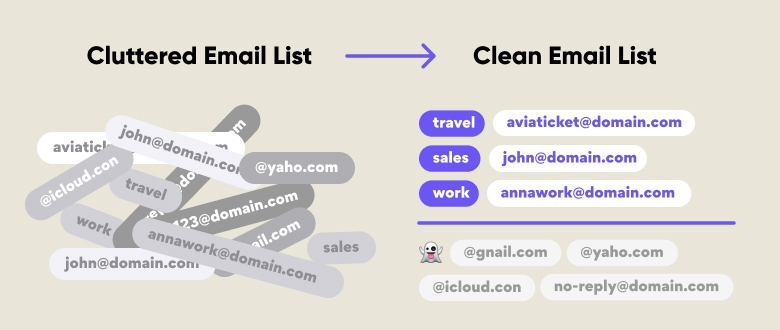
La higiene de lista de email, también conocida como limpieza de lista o depuración de email, es el proceso de eliminar regularmente suscriptores inválidos, inactivos y desenganchados de tu lista de email.
Imagina que descluterficas tu lista de distribución con el objetivo final de llegar a contactos activos que genuinamente desean recibir tus emails.
¿Por Qué Importa Tanto Limpiar una Lista de Email?
Los proveedores de servicios de internet (ISPs) como Gmail, Outlook y Yahoo están atentos a ti (y a cómo te comunicas con tu lista). Monitorean cómo los destinatarios interactúan con tus emails para determinar si eres un remitente legítimo o un spammer.
📌 Una lista sucia es una bandera roja importante. Siempre que envíes mensajes a direcciones de email inexistentes o suscriptores inactivos, no solo te marcas como spam. También envía una señal a los ISPs de que tu contenido realmente no es valioso.
En conclusión, la depuración de lista de email no es solo ser diligente. Lo más importante es que es una estrategia para mantener una alta reputación del remitente y asegurar el éxito de tus campañas de marketing por email.
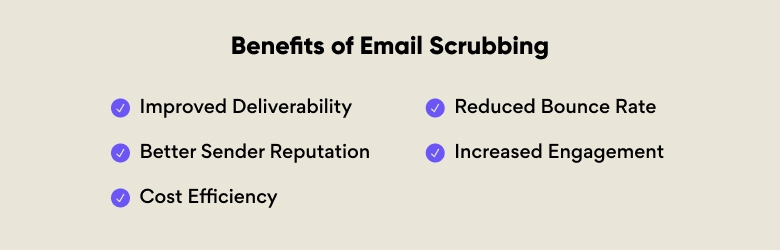
Esto se traduce en un mejor compromiso de los destinatarios y una campaña de email más efectiva. En otras palabras, la higiene adecuada de la lista mantiene tus emails enfocados en las personas correctas sin desorden de contactos obsoletos.
Por Qué la Higiene de Lista es Esencial para Campañas de Email
La higiene de lista en campañas de email es importante por una razón simple: listas limpias significan mejores resultados. Enviar emails a direcciones malas o personas que ya no desean recibirlos reduce tu entregabilidad. Las tasas de rebote aumentan, y los proveedores de servicios de email (ESPs) ven que tu lista no está bien gestionada. Como resultado, podrían comenzar a bloquear tus emails o enviarlos directamente a spam. Peor aún, las direcciones obsoletas podrían ser trampas de spam, dañando tu reputación del remitente.
En resumen, la buena higiene de lista mantiene tu rendimiento de email alto, pero también mantiene tu reputación intacta con los ESPs, haciendo más probable que termines en la bandeja de entrada del destinatario.
¿Qué Pasa Si No Gestiono la Higiene de Lista?
Muchos especialistas en marketing se obsesionan con el crecimiento de su lista de email, creyendo que más grande siempre es mejor, pero no es lo más importante. Descuidar tu lista tiene un efecto directo y dañino en el rendimiento de tu campaña.
La reputación del remitente se desploma
Tu reputación del remitente de email es fundamental para una campaña de marketing por email exitosa. La reputación del remitente dicta si tus emails llegan a la bandeja de entrada, la pestaña de promociones o la temida carpeta de spam.
Los ISPs determinan cuán reputado eres basándose en varios factores, como tasas de rebote, quejas de spam y compromiso del usuario.
Enviar emails a una lista llena de direcciones inválidas conduce a una alta tasa de rebote duro, que es una bandera roja masiva. Los ISPs ven esto como una señal de que podrías estar usando listas antiguas, compradas o scrapeadas, todas características de un spammer.
Y si obtienes una reputación manchada, será difícil repararla y obstaculizará tu capacidad de llegar a tu audiencia efectivamente. Una mala reputación significa que incluso tus suscriptores más comprometidos podrían nunca ver tus mensajes.
La entregabilidad y las tasas de rebote se ven afectadas
La entregabilidad de email es tu capacidad de llegar a la mayoría (si no todas) de tus emails a la bandeja de entrada de un suscriptor. Una alta tasa de rebote afecta tu entregabilidad, de manera negativa. No importa si el rebote es duro o suave, afecta tu entregabilidad de todas formas.
- Los rebotes duros son fallos de entrega permanentes causados por direcciones de email inválidas o inexistentes. Son tóxicos para tu reputación del remitente y deben eliminarse inmediatamente.
- Los rebotes suaves son problemas temporales, como una bandeja de entrada llena o un servidor inactivo. Aunque menos graves, los rebotes suaves consistentes de una dirección pueden indicar que ha sido abandonada.
¿Sabes qué puede ayudar a arreglarlo? ¡Una lista limpia! Minimiza los rebotes de email, señalando a los ISPs que eres un remitente responsable.
El bajo compromiso podría señalar contenido irrelevante
Las tasas de apertura, tasas de clic y respuestas son los indicadores definitivos de una lista saludable. Una lista hinchada con suscriptores desenganchados naturalmente tendrá métricas de compromiso pobres.
Estos números bajos no solo se ven mal en tus reportes; también le dicen a los ISPs que tu contenido no es relevante. Ahora esto puede dañar aún más tu reputación del remitente.
Al eliminar suscriptores inactivos, obtienes una imagen más precisa del rendimiento de tu campaña y aseguras que solo te comuniques con una audiencia que le importa.
¿Cuándo Debo Limpiar y Gestionar Mi Lista de Email?
La limpieza de lista no es una tarea única, ni deberías configurarla y olvidarla. Un raspado trimestral es una línea de base sólida. Sin embargo, si tienes una lista de alto volumen o una que crece rápidamente, mensual tiene sentido.
La limpieza continua de la lista de email es una excelente manera de evitar un impacto negativo en tu reputación del remitente, entregabilidad y bajo compromiso. Y sí, aunque suene tan tedioso, piénsalo de esta manera: cuanto más esperes, más suciedad digital se acumula.
Las limpiezas regulares previenen que los problemas se salgan de control. Hacen que la higiene de la lista de correo sea más rápida y menos disruptiva cada vez.
Ahora, hacer esto manualmente simplemente se siente como agregar otra cosa a tu lista de tareas. Entonces las automatizaciones, sin mencionar agregarlo como un elemento básico de tu flujo de trabajo de marketing, podrían hacerte mucho bien.
Mantén la Buena Higiene de Email con Integraciones y Flujos de Trabajo Automatizados
El marketing moderno es sobre automatización. Tu CRM y ESP deberían trabajar juntos para mantener la higiene de lista con mínimo esfuerzo manual.
Puedes comenzar configurando flujos de trabajo que etiqueten y segmenten automáticamente suscriptores basándose en su actividad. Por ejemplo:
- Un flujo de trabajo que puede etiquetar a un nuevo suscriptor que confirmó a través de doble opt-in como "Comprometido".
- Un flujo de trabajo que puede mover automáticamente a un suscriptor que no ha abierto un email en 90 días a un segmento "Inactivo" y desencadenar tu campaña de reenganche.
- Configurar una regla que mueva usuarios reenganchados a la lista activa.
- Configurar una regla que mueva usuarios que no se reenganchen a un flujo de trabajo final que puede desuscribirlos automáticamente después de un período establecido.
Estos sistemas automatizados pueden mantener tu lista limpia en tiempo real, sin mencionar liberar tu tiempo para que no tengas que agregar otra cosa a tu ya pesada carga mental.
¿Cuáles Son Algunas Herramientas de Higiene de Lista de Email Que Pueden Ayudar?
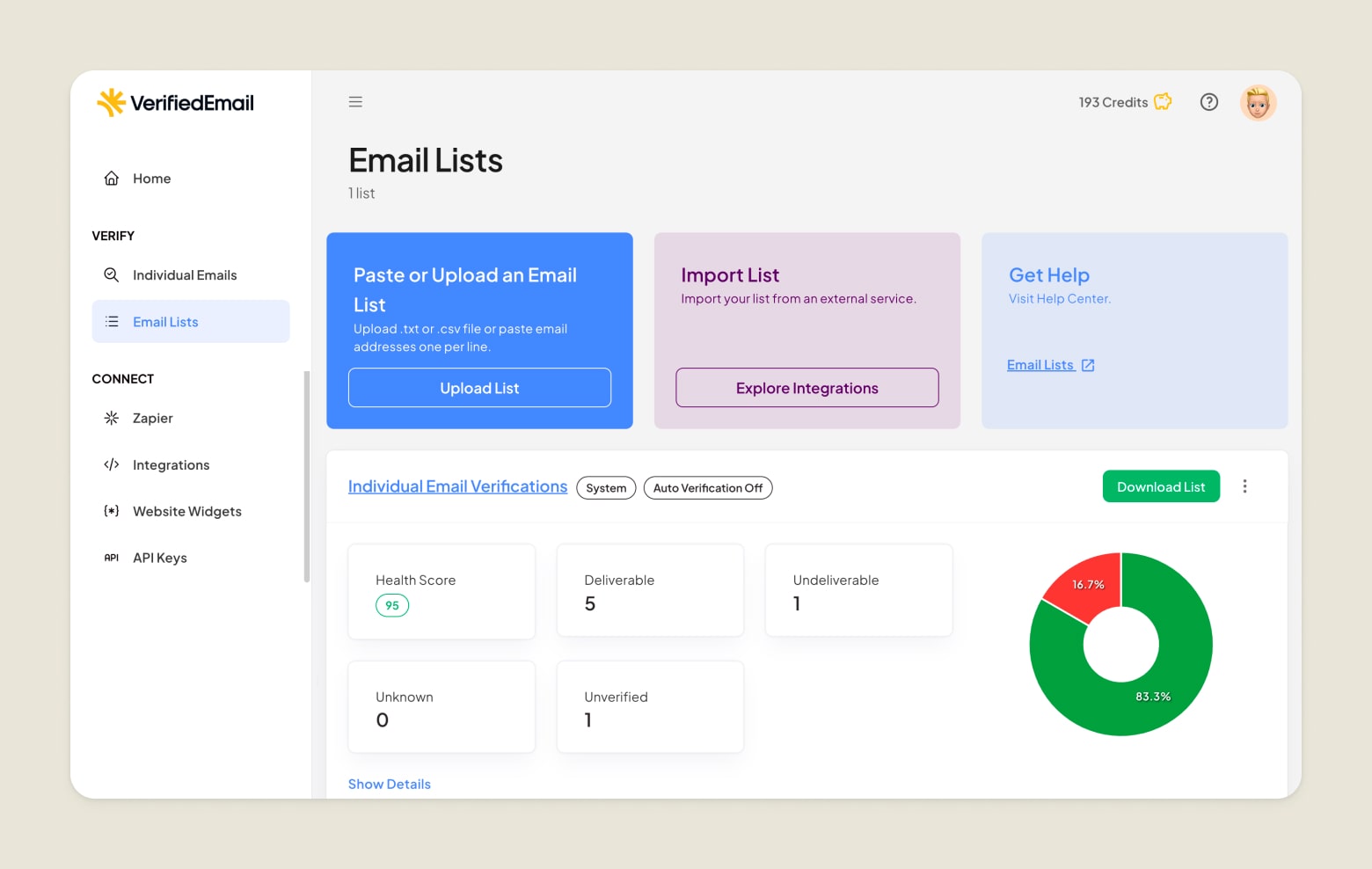
Limpiar una lista manualmente es ineficiente y propenso a errores. Las herramientas de verificación y validación de email automatizan el proceso, proporcionando una defensa poderosa contra datos malos. Estos servicios también sirven como herramientas de limpieza de lista de email que usan algoritmos avanzados para verificar la validez de cada dirección de email en tu lista.
Muchas herramientas de limpieza de lista de email también ofrecen verificación en tiempo real. Al integrar una API en los formularios de registro de tu sitio web, puedes bloquear direcciones de email inválidas o desechables en el punto de entrada. Este enfoque preventivo es mucho más efectivo que limpiar un desorden más tarde.
Para una limpieza de lista integral, servicios como VerifiedEmail se destacan. Estas herramientas ofrecen análisis profundo (y automatizado) para identificar no solo direcciones inválidas sino también trampas de spam, servidores catch-all y otros contactos riesgosos.
¿Cuáles Son Algunas de las Mejores Prácticas de Higiene de Lista de Email?
¡Es hora de ensuciarse las manos! Aquí hay algunas mejores prácticas de limpieza de lista de email que pueden ayudarte a lograr y mantener una sólida higiene de email.
Elimina emails inválidos
El primer y más crítico paso es eliminar rebotes duros. La mayoría de los proveedores de servicios de email (ESPs) lo hacen automáticamente, pero usar una verificación dedicada como la herramienta VerifiedEmail proporciona una limpieza más profunda.
Coloca suscriptores inactivos en segmentos
Clasifica suscriptores que no han abierto o hecho clic en un email durante un período específico (p. ej., un mes o tres meses). ¡Pero no los elimines todavía! Puedes configurar reglas para segmentar estos suscriptores inactivos que puedes usar para una campaña de reenganche.
Ejecuta una campaña de reenganche
Enfócate en tu segmento inactivo con una campaña "win-back". Usa una línea de asunto como "¿Es esto adiós?" o "¿Aún quieres saber de nosotros?". Ofrece una razón convincente para quedarse, como un descuento especial, una membresía más barata, o un resumen de tu mejor contenido.
Si todavía no se engancha, quizás sea lo mejor dejarlos ir.
Aplica políticas de supresión
Una lista de supresión es una lista de "no enviar". Debe incluir automáticamente todos los desuscriptores, rebotes duros y quejas de spam.
Aplicar políticas de supresión asegura que nunca envíes accidentalmente un email a alguien que se ha excluido o tiene una dirección inválida. Lo que hace esto es proporcionar una capa crucial de protección para tu reputación.
¿Cómo Puedo Construir una Lista Saludable desde el Primer Día?
Muchos especialistas en marketing se enfocaban demasiado en cómo obtener emails. ¿Qué tal si desafiamos esto e invertimos la estrategia? Como enfocarse en cómo ganarlos?
Entonces hablemos sobre permisos.
Doble opt-in
Es una buena idea tener esto como tu configuración predeterminada. Así es como funciona el doble opt-in: después de que un usuario se registra, recibe un email pidiéndole que confirme su suscripción.
📌 Lo que esto hace es verificar que la dirección de email sea válida y asegurar que tengas consentimiento explícito.
Es bastante simple, pero hace mucho por tu reputación ya que puede filtrar errores tipográficos, bots y suscriptores de baja intención desde el principio.
Opción de salida clara
Haz ridículamente fácil para las personas desuscribirse. ¿Dije ridículamente fácil?
📌 Ocultar el enlace de desuscripción es una estrategia autodestructiva. Puede resultar contraproducente. Un usuario frustrado que no puede encontrar el enlace es mucho más probable que marque tu email como spam, que es infinitamente más dañino para tu reputación del remitente que una simple desuscripción.
El permiso es clave
Nunca, jamás compres una lista de email. Es un atajo a la carpeta de spam. Enfócate en el crecimiento orgánico a través de contenido valioso, imanes de clientes potenciales y formularios de registro claros. Un suscriptor ganado es exponencialmente más valioso que uno comprado.
¿Cuáles Son Algunas Métricas Clave Que Puedo Monitorear?
Peter Drucker, un gurú moderno de la gestión, tiene esto que decir sobre las mediciones: "No puedes mejorar lo que no mides." También dijo, "Lo que se mide, se gestiona."
Lo mismo es cierto con la salud de la lista de email. Porque los datos cuentan la historia de la salud de tu lista, vale la pena vigilar de cerca estos indicadores clave de rendimiento (KPIs):
- Tasa de rebote
- Tasa de quejas de spam
- Tasa de apertura
- Tasa de clics (CTR)
Deja de Aferrarte a Listas de Email Hinchadas y Llenas de Zombis
El camino al marketing por email efectivo (y también a las mejores prácticas) no es a través del volumen puro, sino a través de calidad y compromiso.
Al abrazar una rigurosa higiene de lista de email, no solo estás limpiando datos, estás construyendo una línea directa y poderosa a una audiencia que valora lo que tienes que decir.
No te preocupes, hay soluciones de higiene de email que pueden ayudarte a automatizar y hacer la vida más fácil. ¡Ahora esa es una estrategia que vale la pena invertir! Los servicios de higiene de email identifican direcciones riesgosas o inválidas, trampas de spam y problemas de entregabilidad mucho más efectivamente que las verificaciones manuales. También automatizan tareas de verificación repetitivas y reducen errores humanos. Como parte de las mejores prácticas de verificación de email, estos servicios juegan un papel central en mantener una lista de email limpia y confiable. Usa doble opt-in, verifica nuevas registros en tiempo real, limpia regularmente tu lista con herramientas de verificación de email, y di adiós a los contactos desenganchados. Estos pasos pueden mantener tu lista fresca, activa y lista para funcionar como un campeón. Preguntas Frecuentes
Limpia ahora tus listas de emails.
Verifica gratis 200 correos electrónicos. Garantizamos el mejor precio para listas de más de un millón de emails.