

Email Marketing Trends 2026: Benchmarks, Data, And Forecasts
Email marketing in 2026 sits at a turning point shaped by AI, privacy enforcement, and shifting engagement behavior. This report consolidates current benchmarks and forward-looking projections to support accurate planning, analysis, and citation.

Data Sources, Freshness, And Trustworthiness
This article is based entirely on a consolidated research dataset compiled in January 2026, covering historical data from 2020–2025 and modeled forecasts through 2030. The dataset synthesizes findings from 109 industry reports, benchmarks, and studies.
Primary sources include Litmus, HubSpot, Statista, Campaign Monitor, Omnisend, Klaviyo, Validity, EmailToolTester, and other established research publishers, alongside more than 90 additional authoritative datasets. These sources are widely cited across marketing, SaaS, ecommerce, and nonprofit sectors.
The analysis reflects the latest post–Apple Mail Privacy Protection environment, updated deliverability rules from Gmail, Yahoo, and Microsoft, and current AI adoption rates. Forecasts are built using transparent modeling assumptions grounded in observed adoption curves and platform enforcement trends, making the findings both current and verifiable.
Email Marketing Performance Benchmarks (2025–2026)
Historical performance context
Email performance metrics shifted significantly between 2020 and 2025 due to privacy protections and engagement filtering. Open rates peaked in 2022 at 48.69% before declining to a stabilized baseline in 2024–2025.
Key trend: visibility-based metrics declined, while intent-based metrics improved.
| Metric | 2025 Average |
|---|---|
| Open rate | 26.9%–42.35% |
| Click-through rate (CTR) | 2.0%–3.2% |
| Click-to-open rate (CTOR) | 5.63% |
| Conversion rate | 2.4%–2.6% |
| Bounce rate | 2.48% |
| Unsubscribe rate | 0.1% global |
Core benchmarks across industries
These benchmarks reflect a post-privacy baseline where open rates are no longer a reliable proxy for engagement. While opens declined, click-through, CTOR, and conversion rates improved, signaling stronger audience relevance and better timing.
The table does not capture differences by mailbox provider or industry, where variance remains wide. Overall, engagement quality—not volume—has become the defining performance factor.
2026–2030 Performance Forecasts
Open rate outlook
Open rates are projected to stabilize rather than fully recover, reflecting privacy filtering maturity.
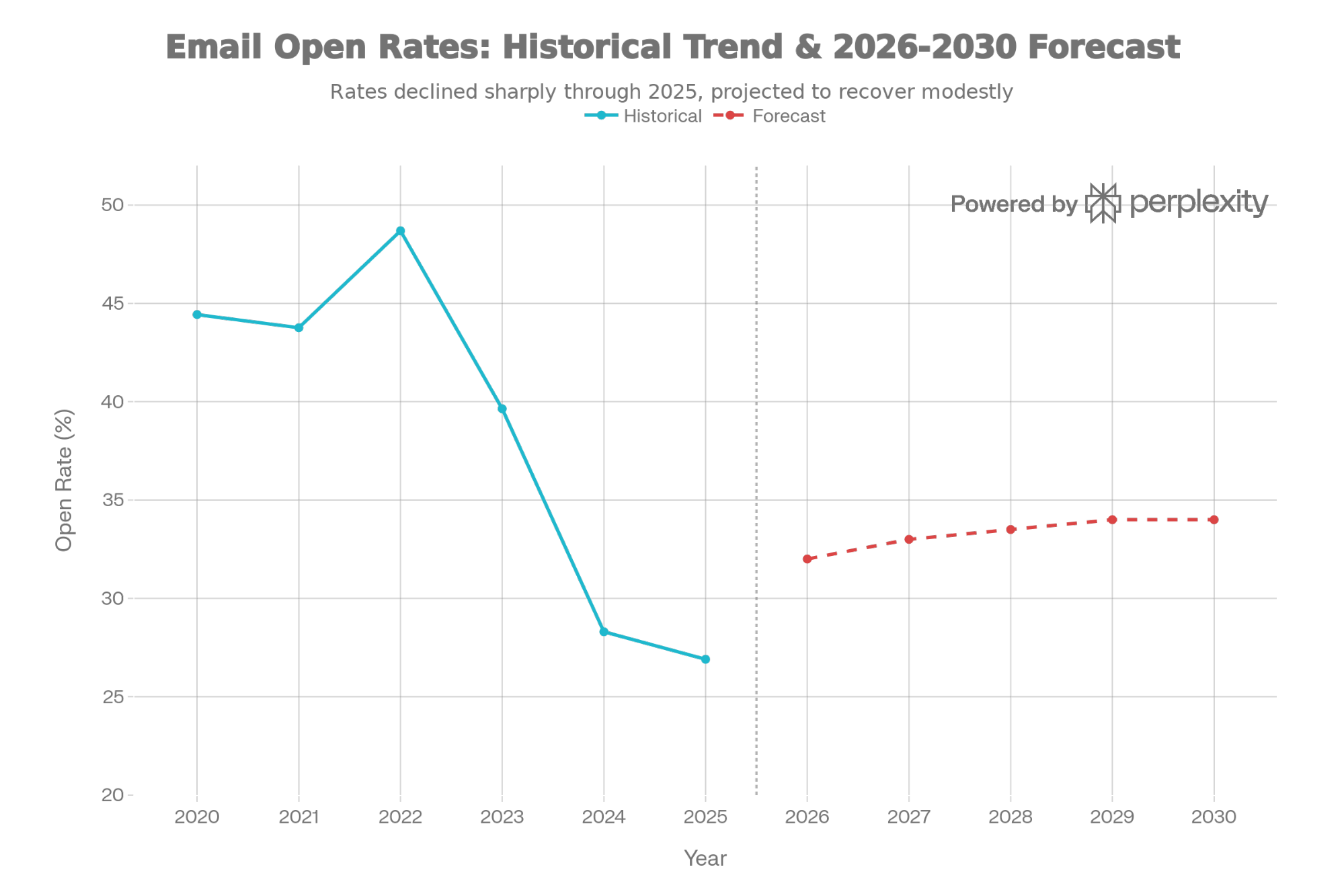
| Year | Projected open rate |
|---|---|
| 2026 | 31%–34% |
| 2028 | 33.5% |
| 2030 | 34% |
Email open rates declined sharply from 48.69% in 2022 to 26.9% in 2025 following the rollout of Apple Mail Privacy Protection, after which they entered a stabilization phase.
The projected recovery to 31–34% by 2030 reflects improved sender adaptation, AI-driven relevance, and the normalization of privacy filtering rather than a return to pre-privacy visibility.
These figures do not fully capture inbox placement volatility or provider-level enforcement differences, which continue to suppress measurable opens. As a result, open rate should be treated as a directional signal, not a primary success metric.
CTR growth trajectory
CTR growth outpaces open rate recovery due to AI-driven personalization and behavioral triggers.
| Year | Projected CTR |
|---|---|
| 2026 | 3.5% |
| 2028 | 4.1% |
| 2030 | 4.5% |
CTR is projected to rise steadily from 3.5% in 2026 to 4.5% by 2030, outpacing open rate recovery and signaling a structural shift toward intent-based engagement.
This growth is driven by AI personalization, behavioral triggers, and more precise segmentation rather than increased send volume.
The forecast does not account for competitive saturation as AI becomes universal, which may compress gains after 2028. Even so, click behavior remains the most stable engagement indicator under privacy-restricted conditions.
AI And Personalization Adoption
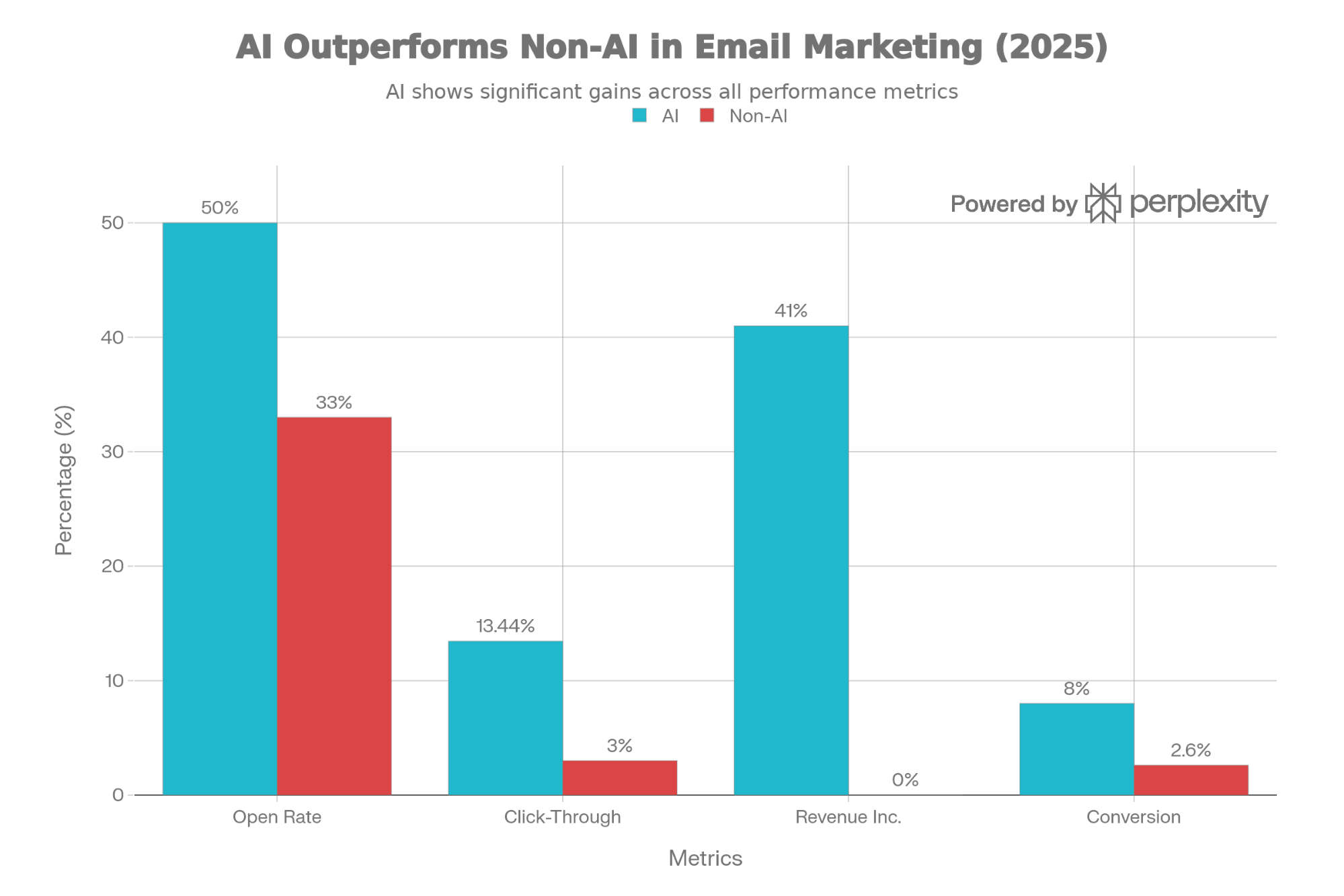
AI is no longer experimental in email marketing.
Current adoption levels
- 64% of marketers use AI in email marketing
- 50% use AI for personalization
- 41% use AI for subject line optimization
- 29% use AI for send-time optimization
Performance impact
AI-driven campaigns consistently outperform traditional approaches:
- 41% revenue increase from AI personalization
- CTR of 13.44% vs 3% for non-AI campaigns
- 50% higher open rates with AI-optimized subject lines
Adoption forecast
AI adoption is projected to reach 97% by 2030, becoming default functionality rather than a differentiator.
Automation And Revenue Concentration
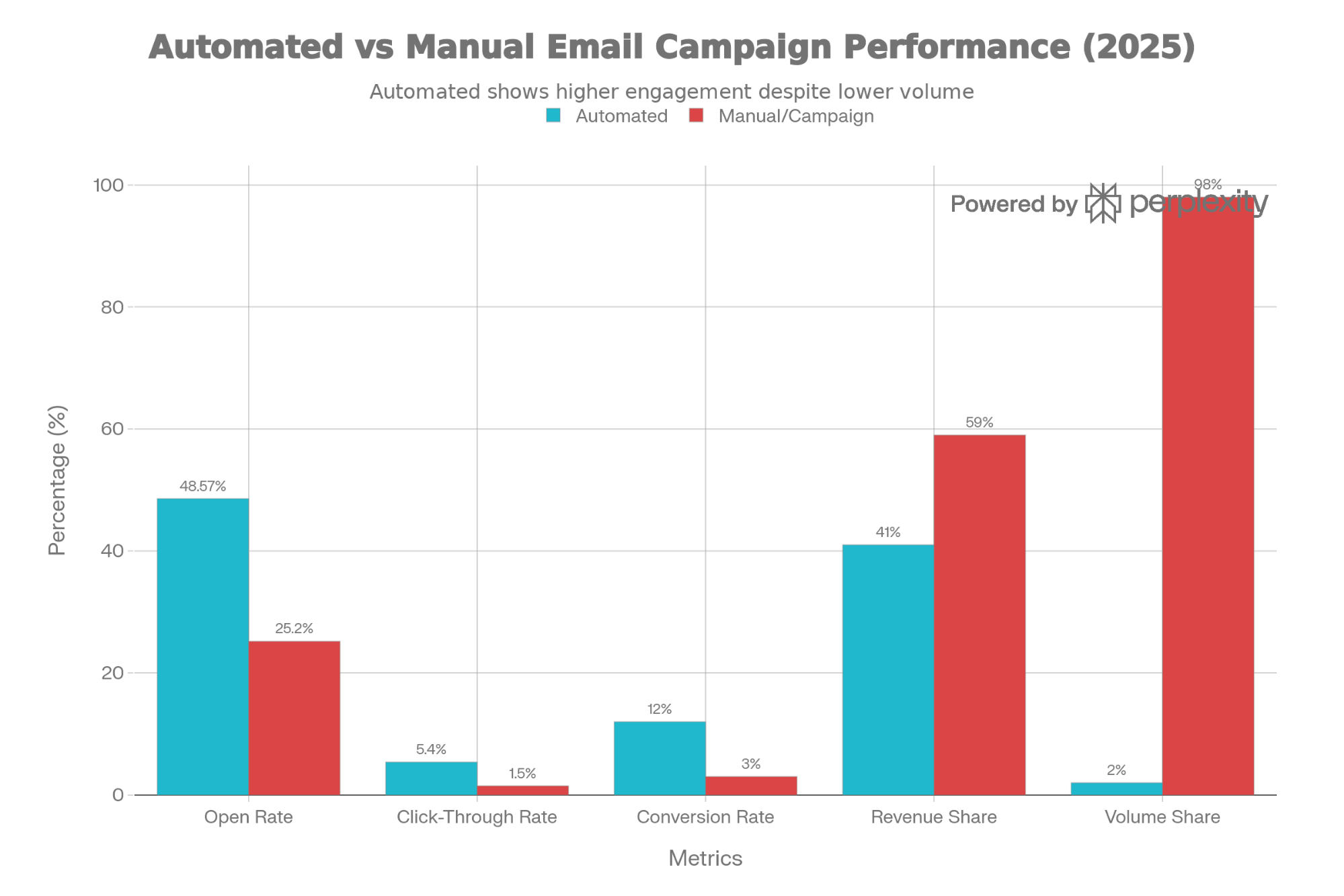
Automated email flows continue to deliver disproportionate value.
Automation efficiency
- 2% of send volume generates 41% of total email revenue
- Automated open rates: 48.57%
- Manual campaign open rates: 25.2%
Revenue impact comparison
| Metric | Automated | Manual |
|---|---|---|
| CTR | 5.4% | 1.5% |
| Conversion rate | 12% | 3% |
| Revenue per send | 4× higher | Baseline |
This table highlights a structural efficiency gap rather than a temporary optimization advantage. Automated flows benefit from timing, intent, and contextual relevance that bulk campaigns cannot replicate.
The data does not reflect deliverability risks that emerge when automation scales without proper list hygiene. As automation expands through 2030, list quality and engagement control become the limiting factors.
This concentration underscores why using email list hygiene tips and controlling deliverability are critical as automation scales.
Cold Email Benchmarks And Trends
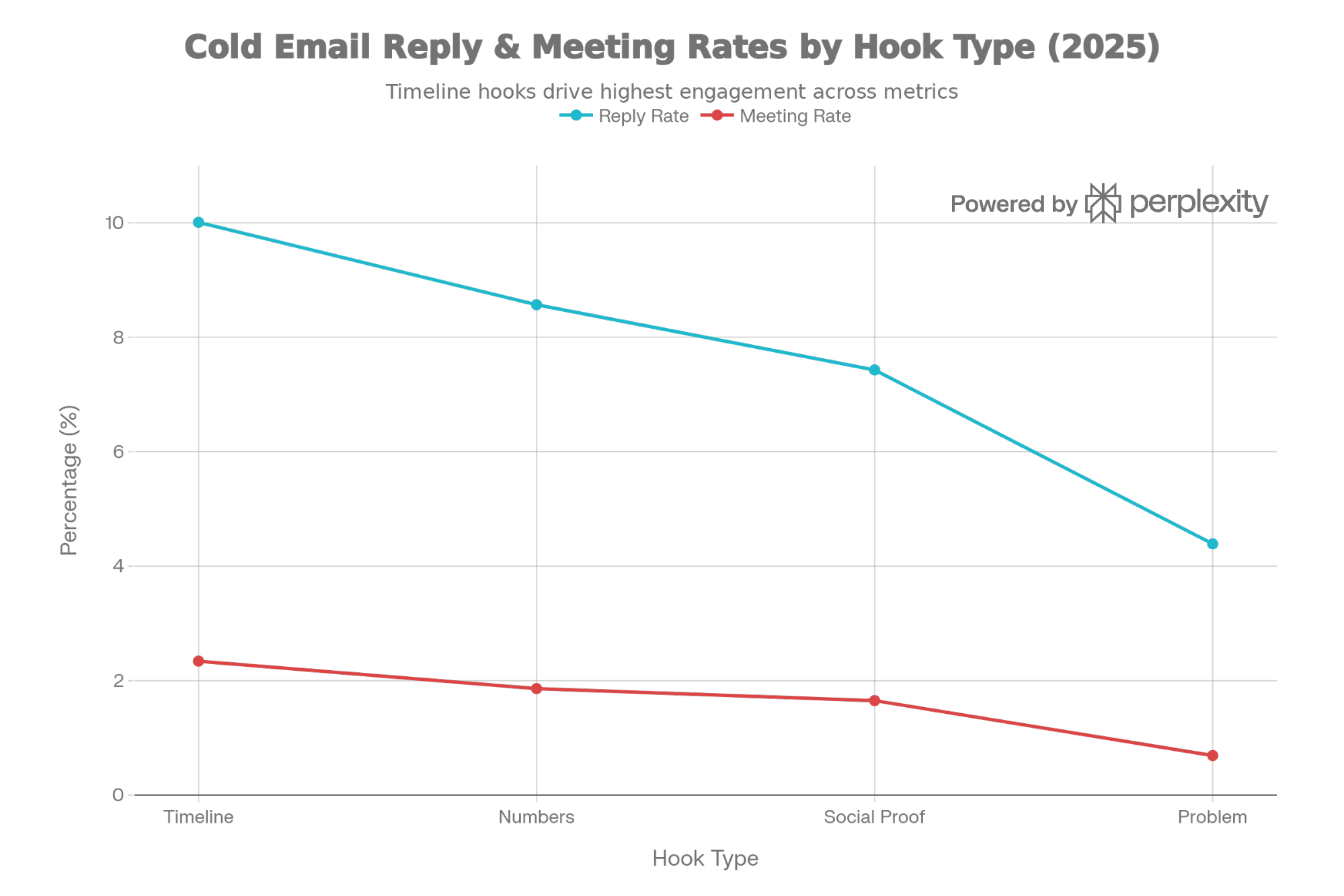
Reply rate benchmarks (2025)
- Average reply rate: 3%–5.1%
- Strong performance: ~10%
- Top-quartile campaigns: 15%+
Hook performance comparison
| Hook type | Reply rate |
|---|---|
| Timeline-based | 10.01% |
| Numbers-based | 8.57% |
| Social proof | 7.43% |
| Problem-based | 4.39% |
Timeline-based hooks outperform problem statements by more than 2×, reflecting a shift in buyer psychology toward speed, feasibility, and concrete outcomes.
The table does not capture targeting quality, which can push reply rates far beyond these averages.
Volume-driven cold outreach continues to decline in effectiveness as mailbox providers tighten enforcement. Precision targeting and relevance now define cold email success.
Industry-Specific Email Benchmarks
B2B
- Open rate: 20.8%
- CTR: 3.2%
- Conversion rate: 2.5%
Ecommerce
- Average open rate: 26.64%
- Automated conversion rate: 3%
- US ecommerce ROI: $72 per $1 spent
Nonprofit
- Open rate: 28.59%
- CTR: 3.29%
- Welcome email open rate: 80%
Nonprofits continue to outperform for-profit organizations on engagement but face slower list growth.
Deliverability And Inbox Placement
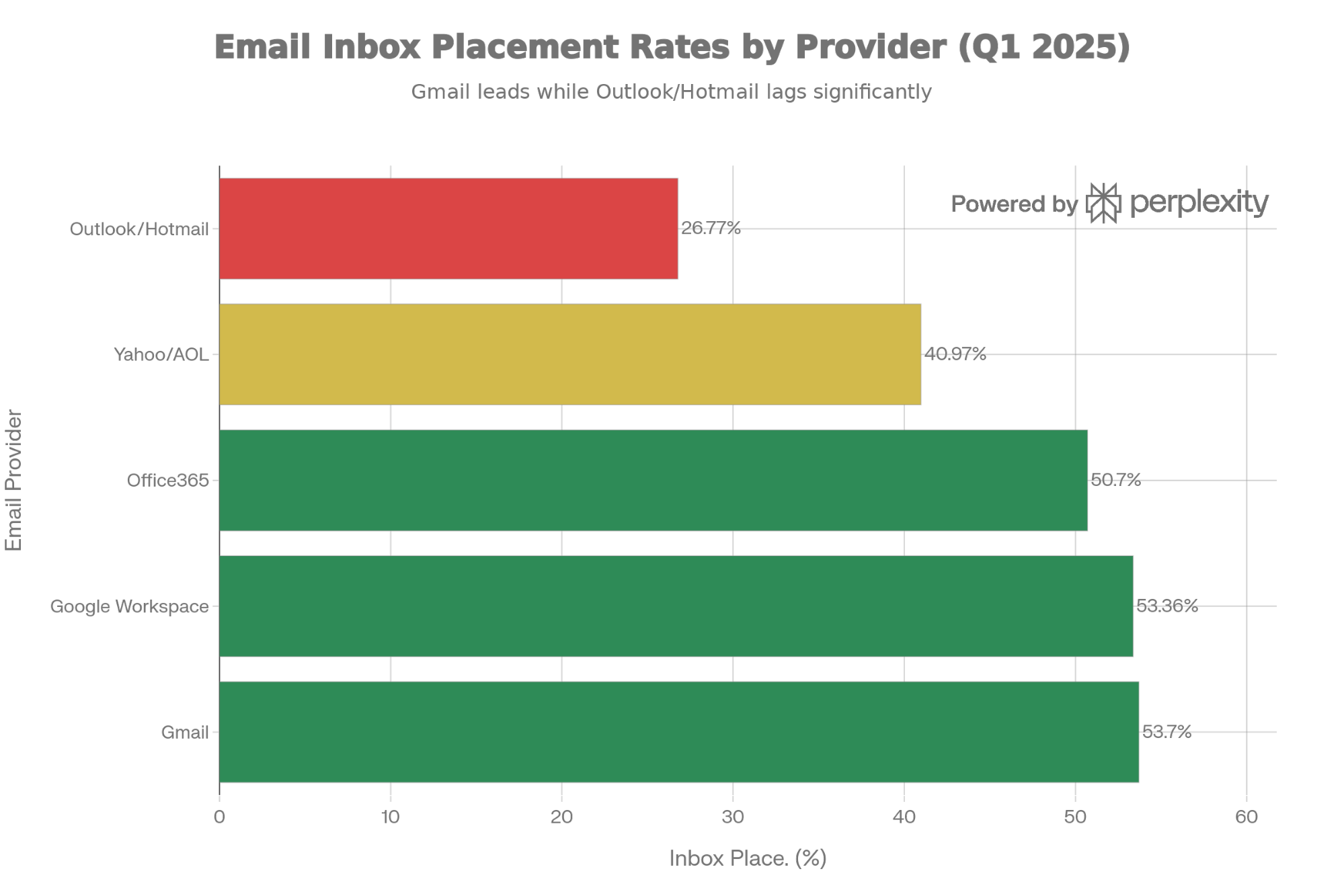
Global deliverability snapshot
- Average inbox placement: 84%
- 16.9% of emails never reach the inbox
- 10.5% land in spam
This means roughly one in six marketing emails fails before engagement is even possible. Inbox placement has become a primary revenue constraint rather than a technical afterthought.
Check out more numbers from our email deliverability statistics report.
Provider-level filtering, engagement history, and list accuracy now outweigh content quality alone.
Provider-level challenges
Outlook and Office365 experienced the steepest declines, with inbox placement falling below 30% for some senders due to strict bulk-sender enforcement.
Regional performance
Europe leads globally with 89.1% inbox placement, driven by GDPR-enforced list hygiene and lower volume per sender.
Tools like VerifiedEmail help address these challenges by scrubbing malformed addresses, checking domain health, and verifying mailboxes in real time, reducing bounce rates before campaigns are sent.
Mobile Email Behavior
Mobile is now the dominant access point for email.
- 55% of all opens occur on mobile
- 42% of users delete non-optimized emails within three seconds
- Mobile-optimized emails see 15% higher conversion rates
By 2030, mobile opens are projected to reach 70%, making mobile-first design mandatory rather than optional.
Unsubscribe, Spam, And Engagement Health
| Rate | Interpretation |
|---|---|
| <0.2% | Excellent |
| 0.2%–0.5% | Acceptable |
| >1.5% | Critical |
Unsubscribe benchmarks
Unsubscribe rates declined to 0.1% globally in 2025, reflecting improved segmentation and frequency control. However, lower unsubscribes do not always indicate healthy engagement, as silent disengagement continues to rise. Preference centers and adaptive frequency management will increasingly determine list longevity through 2030.
Compliance thresholds
- Gmail/Yahoo spam complaint limit: <0.3%
- One-click unsubscribe: mandatory
Maintaining list accuracy is now directly tied to deliverability survival. VerifiedEmail supports this by continuously cleaning lists and identifying disposable, role-based, or invalid addresses before they damage sender reputation.
ROI And Revenue Outlook
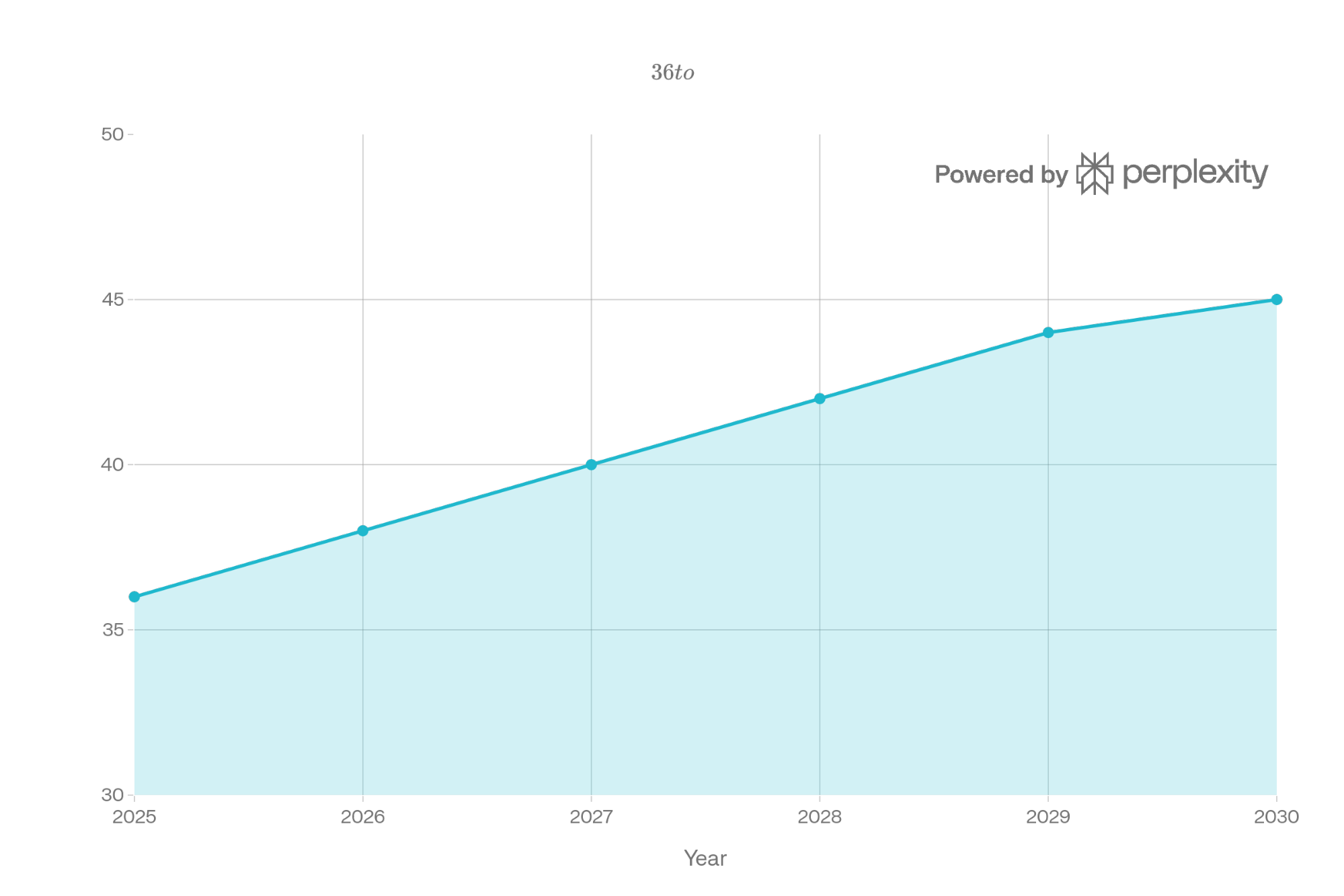
Current ROI
- Average ROI: $36–$40 per $1 spent
- Top performers: $70+ per $1
- Email outperforms all other digital channels on median ROI
Revenue growth forecast
| Year | Revenue |
|---|---|
| 2025 | $11.3B |
| 2028 | $18.2B |
| 2030 | $21.8B |
Email marketing ROI projected to grow from $36 to $45 per dollar spent by 2030, with industry revenue nearly doubling from $11.3B to $21.8B.
Revenue growth is driven more by efficiency gains and global adoption than by increased message volume. The forecast does not fully account for rising compliance and infrastructure costs, which may compress margins for less mature programs. Email remains the highest-ROI channel, but execution quality will increasingly determine outcomes.
Key Strategic Takeaways For 2026
- AI-driven personalization is no longer optional
- Automation delivers outsized revenue relative to volume
- Deliverability is a primary growth constraint
- Mobile-first design is now baseline expectation
- List quality directly impacts ROI and sender survival
Email marketing remains one of the highest-ROI channels available, but success in 2026 and beyond depends on precision, compliance, and data-driven execution.
Sources
- Litmus
- HubSpot
- Statista
- Campaign Monitor
- Klaviyo
- Omnisend
- Validity
- EmailToolTester
- Mordor Intelligence
- Growth Market Reports
- Consolidated research dataset: Email Marketing Trends 2026: Data-Driven Research Report
Verify 200 emails for free. For lists over one-million emails, we will beat the price of any competitor, guaranteed.