

Email Marketing ROI Statistics For 2024–2026: What The Data Really Shows
Email marketing continues to outperform nearly every other digital channel, but the real story sits in the details. Below is a current, data-backed look at email marketing ROI in 2024–2025, including where the numbers come from, how they differ by business model, and what actually drives results.

How This Data Was Collected and Why It’s Trustworthy
This article is based on a consolidated dataset spanning 2024–2026, pulled from widely recognized industry authorities and large-scale studies. Core benchmarks come directly from Litmus, Omnisend, EmailToolTester, SQ Magazine, Data-Mania, Martal, and EmailMonday, supported by dozens of additional secondary analyses and meta-studies.
The data is considered fresh because:
- All primary benchmarks were published or updated between mid-2024 and late-2025 (almost 2026).
- Several sources rely on real merchant or marketer datasets (10,000+ companies in some cases).
- Results were cross-checked for consistency across B2B, B2C, SaaS, and eCommerce.
Because these sources consistently report similar ROI ranges using different methodologies, the figures below represent a reliable consensus rather than a single-study outlier.
Email Marketing ROI Benchmarks (2024–2025)
Across industries and geographies, email marketing delivers a remarkably stable return.
Consensus benchmark:
- $36–$42 earned for every $1 spent
- 3,600–4,200% ROI
This range appears consistently across Litmus, EmailToolTester, Omnisend, EmailMonday, and Martal, making it the most defensible benchmark for planning and forecasting.
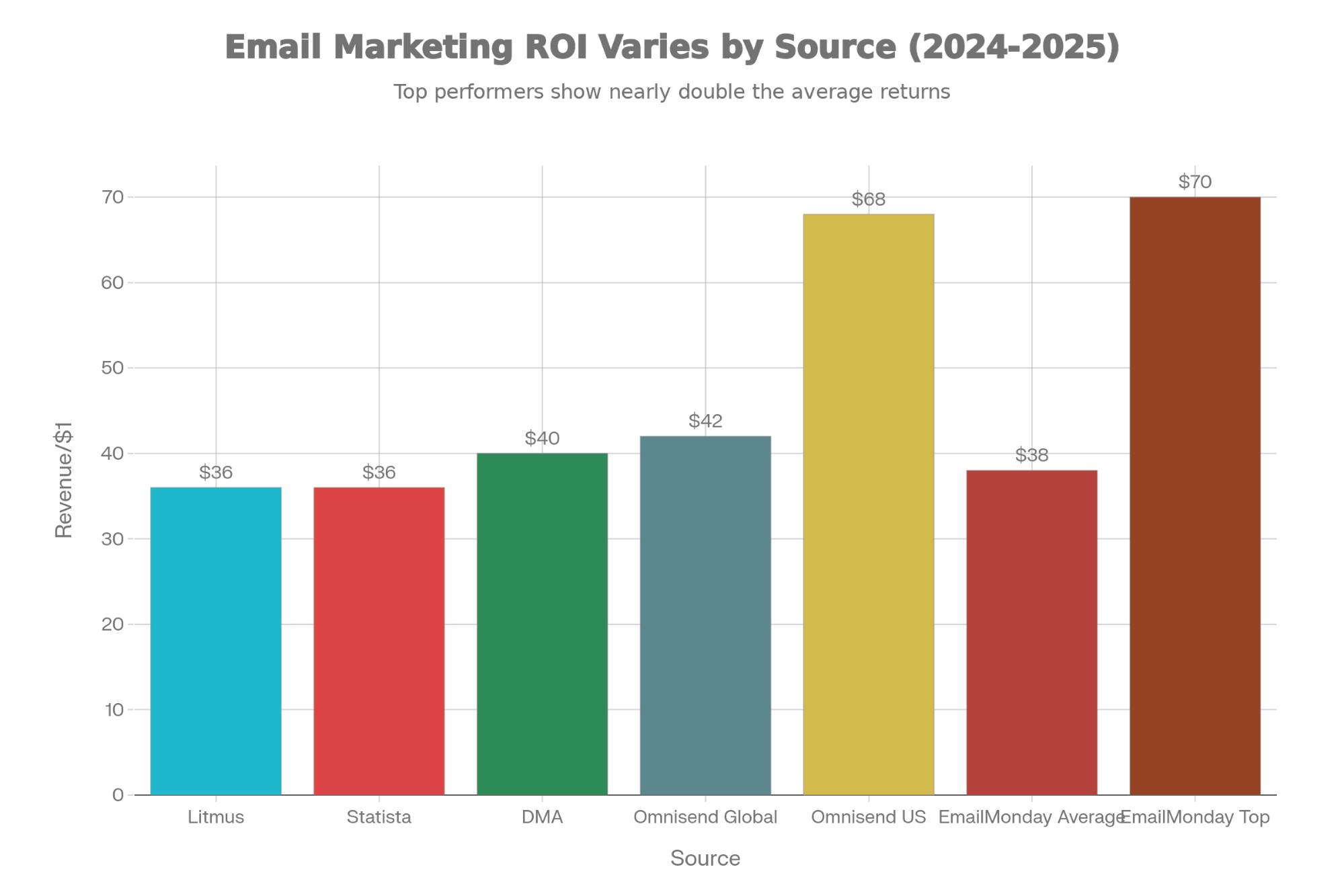
ROI by segment
| Segment | Typical ROI |
|---|---|
| B2C eCommerce (US) | $45–$72 per $1 |
| Global eCommerce average | ~$42 per $1 |
| B2B (general) | $36–$46 per $1 |
| B2B SaaS & services | $36–$40 per $1 |
| Top 15–20% of performers | $70+ per $1 |
💡 Tip: If results sit near the average, that’s not a ceiling. Data shows the biggest gains come from execution quality, not industry alone.
Email ROI Compared to Other Marketing Channels
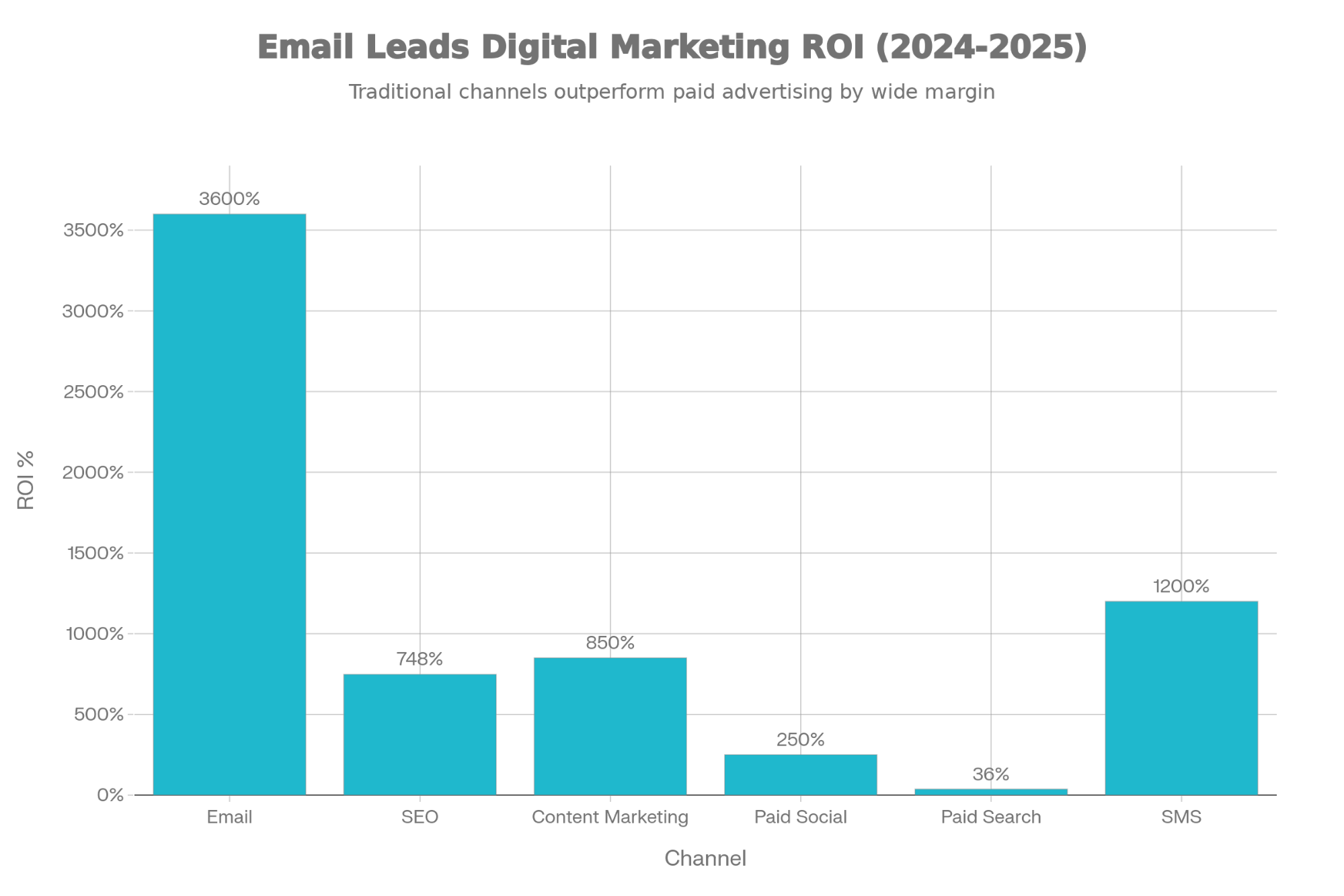
Email’s performance becomes even clearer when placed alongside other channels.
| Channel | Typical ROI |
|---|---|
| Email marketing | 3,600–4,200% |
| SEO (B2B SaaS) | ~748% |
| Content marketing | 317–1,389% |
| Paid social | ~250% |
| Paid search (PPC) | ~36% |
This gap explains why 87% of marketers plan to increase or maintain email spend despite rising costs elsewhere.
What’s Driving Email ROI Higher in 2025
Several shifts explain why email continues to hold its lead.
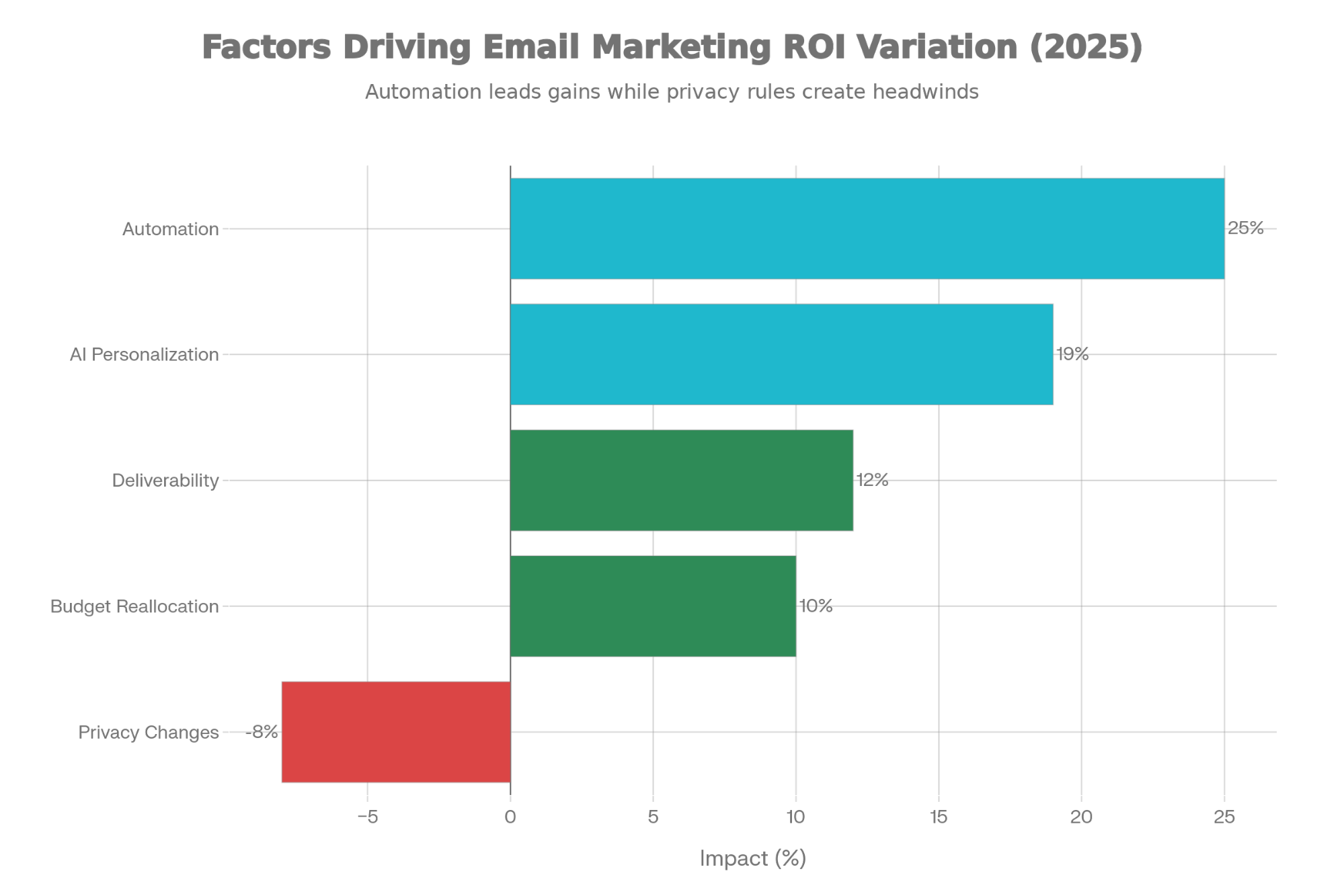
AI-powered personalization
Brands using AI-driven personalization report up to 42% higher revenue, with click-through rates exceeding 13%. This alone can lift ROI by nearly 20%.
Automated workflows
Automations generate:
- 37% of sales from just 2% of send volume
- 30× higher returns than one-off campaigns
Abandoned cart and post-purchase flows remain the strongest revenue drivers.
Deliverability as a revenue lever
Inbox placement is harder than it used to be. Roughly 7% of emails now land in spam, directly reducing ROI. Tools like VerifiedEmail, which offers real-time and bulk email list cleaning, help protect sender reputation by removing invalid, disposable, and risky addresses before campaigns are sent.
B2B Email Marketing ROI: What the Numbers Say
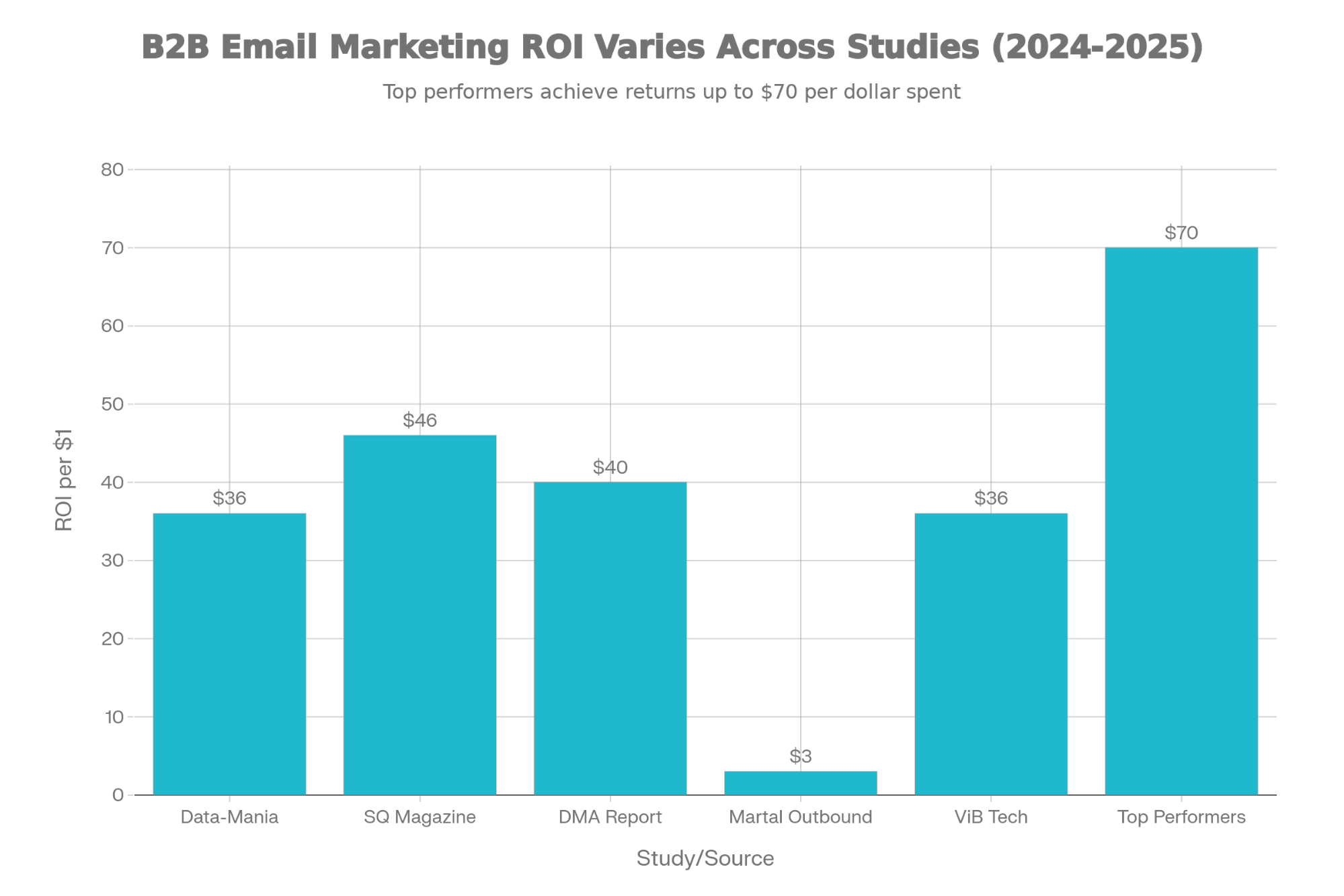
B2B performance is often misunderstood because inbound and outbound results get blended together.
What the data shows:
- Average B2B ROI: $36–$46 per $1
- Email drives 30–60% of marketing-sourced pipeline
- Proper segmentation enables 50%+ MQL-to-SQL conversion rates
Outbound email alone typically delivers lower ROI, but multi-touch nurture sequences dramatically outperform single-send outreach.
Why Published ROI Numbers Often Undersell Email
Several structural limitations affect how ROI is reported.
- Attribution gaps: Most models credit only the final touch, ignoring earlier email influence
- Lifetime value exclusion: Retention and upsell emails compound value over years
- Privacy distortion: iOS auto-opens inflate open rates by 15–20%
- Incomplete cost accounting: Labor and tooling are often excluded
Taken together, email’s true economic impact may be 20–50% higher than standard benchmarks suggest.
Protecting ROI Starts With List Quality
Even strong campaigns underperform when lists decay. Bounces, spam traps, and role-based addresses quietly erode returns. VerifiedEmail addresses this by verifying email addresses in real time, scoring risk, checking DNS and SMTP responses, and identifying disposable or inactive accounts—helping ensure campaigns reach real inboxes instead of damaging sender reputation.
What to Take Away
Email marketing remains the most reliable high-ROI digital channel in 2024–2026, but averages only tell part of the story. The biggest gains come from automation, personalization, deliverability discipline, and realistic attribution—not from sending more emails.
When email is treated as a system rather than a tactic, the numbers consistently outperform nearly every alternative.
Verify 200 emails for free. For lists over one-million emails, we will beat the price of any competitor, guaranteed.